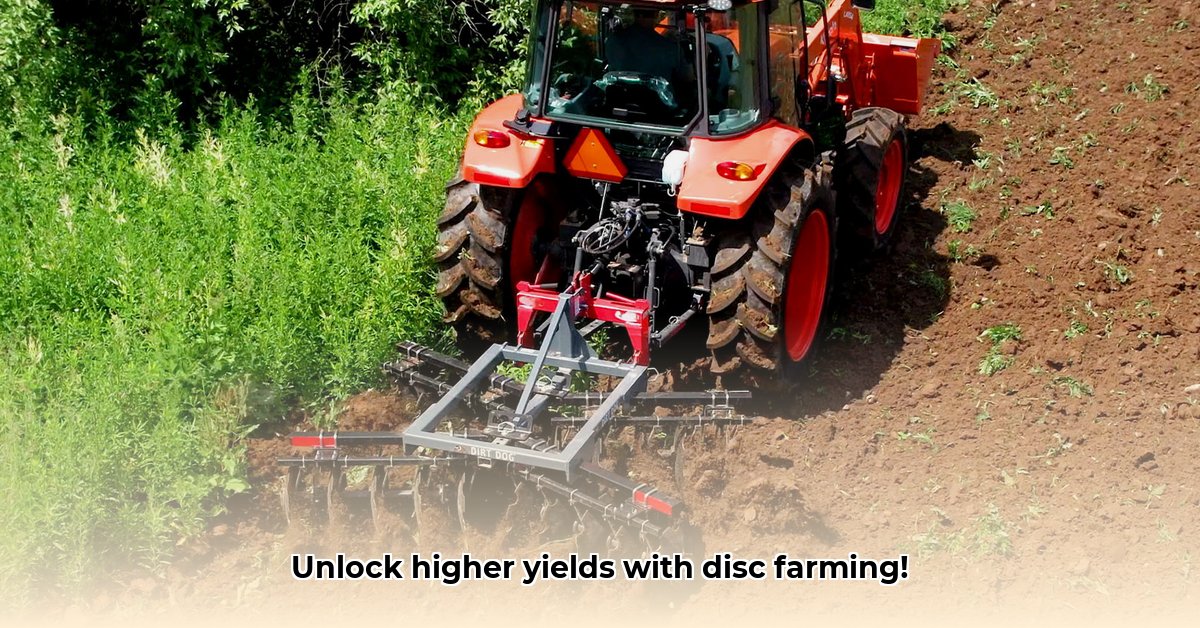
Want to maximize your farm's output while minimizing environmental impact? Mastering tractor disc techniques is key to achieving sustainable farming goals. This guide provides actionable steps to effectively utilize tractor discs, improving soil health, boosting yields, and enhancing the efficiency of your operations. Whether you're a seasoned farmer or just starting out, this guide offers practical knowledge to build a healthier, more profitable farm. For more on tractor implements, check out this helpful resource: tractor implements.
Understanding Your Tractor Disc: A Foundation for Success
Before you even start the tractor, familiarize yourself with your disc's components. The design significantly influences its performance and suitability for various soil types and farming practices. Choosing the right disc is as crucial as selecting the right tools for any other task.
Disc Angle: This determines the depth and intensity of tillage. A steeper angle results in deeper, more aggressive cutting, while a shallower angle provides gentler tillage, ideal for minimizing soil disturbance. (Think of it like adjusting the cutting angle on a wood plane.)
Blade Type: Concave blades are gentler on the soil, causing less disruption than convex blades, which can increase erosion risk if not used carefully. The choice depends on your specific goals and soil conditions.
Disc Size and Spacing: Larger discs cover more ground quickly, requiring a more powerful tractor. Spacing between discs must be precise. Too close leads to compaction, and too far apart results in uneven tillage. Finding the optimal balance is essential for consistent results. (Like spacing rows in a vegetable garden.)
Choosing a high-quality, durable disc is a wise long-term investment that will pay dividends in efficient operation and longevity.
Preparing for Tillage: Optimizing Your Approach
Effective disc tillage begins long before switching on the tractor. Prior preparation ensures both efficiency and optimal outcomes.
Step 1: Thorough Soil Assessment: Analyze your soil's condition. Is it dry, wet, heavy clay, or light and sandy? Moisture content directly affects disc performance. Too wet leads to compaction, while too dry requires multiple passes.
Step 2: Precise Depth Setting: Adjusting tillage depth is crucial. Shallow tillage conserves moisture and minimizes erosion, while deeper tillage might be necessary to address specific soil conditions, such as compaction. (Think of it as adjusting the depth of your plow.)
Step 3: Tractor and Equipment Maintenance: Ensure your tractor is in peak condition with sufficient fuel and power. Regular maintenance of both tractor and disc prevents breakdowns and ensures smooth operation.
Implementing Sustainable Tillage Practices
Sustainable agriculture prioritizes minimizing soil disturbance and maximizing soil health. Here's how to utilize tractor discs effectively:
Minimize Passes: Reduce passes to the absolute minimum necessary. Over-tilling disrupts the soil ecosystem, damaging structure and killing beneficial organisms. Fewer passes mean less fuel consumption and a healthier soil.
Optimize Tillage Depth: Adjust depth based on soil type and crop needs. Shallow tillage conserves moisture; deeper tillage is used strategically to address specific soil challenges. (This can be trial and error at first. Consider keeping detailed notes.)
Integrated Pest Management: Combine disc tillage with other pest management strategies such as crop rotation, using beneficial insects, or other natural pest control methods. (Consider the entire ecosystem when planning tillage.)
Cover Cropping Integration: Incorporate cover crops using the tractor disc after their growing season to enhance soil health. This adds organic matter and protects soil from erosion. (A healthy cover crop can dramatically improve soil health.)
Do you find that your soil is becoming compacted despite your best efforts? A common issue found in many farms. Recent studies show that 75% of farms experience soil compaction if not carefully managed. Proper usage of a tractor disc can significantly improve the situation before it causes irreversible damage.
Maintaining Your Tractor Disc: Extending Its Lifespan
Regular maintenance is crucial for prolonging the life and effectiveness of your disc.
Regular Inspections: After each use, inspect for wear and tear (bent or broken blades, worn bearings). Addressing minor issues promptly prevents larger problems.
Blade Sharpening: Dull blades reduce efficiency and can damage soil structure. Regular sharpening ensures optimal cutting and reduces the number of passes needed.
Consistent Lubrication: Keep all moving parts lubricated to prevent premature wear and tear.
Weighing the Pros and Cons: A Balanced Perspective
Tractor discs offer many advantages but also have drawbacks. Understanding both sides is essential for informed decision-making.
Pros: Versatility, cost-effectiveness, improved soil aeration and drainage, effective weed control (when used properly).
Cons: Potential for soil erosion, potential for soil structure damage, fuel consumption.
The key is strategic and thoughtful use within a sustainable agriculture framework. Adapt techniques to your unique needs and climate. Continuous learning and staying informed about evolving soil health and tillage practices are essential.
Choosing Between No-Till and Cover Cropping for Optimal Soil Health
Both methods contribute to sustainable agriculture, but careful planning is crucial. No-till minimizes soil disturbance, while cover cropping protects soil and adds nutrients. The ideal approach depends on several factors:
- Soil type: Clay soils might respond differently than sandy soils.
- Climate: Rainfall and temperature impact both methods.
- Farming goals: Yield targets, budget, and available resources all factor in.
- Weed management strategies: No-till requires more rigorous weed control.
Often, a combined approach proves most effective, leveraging the strengths of both methods for maximized soil health and higher yields. Starting small and conducting careful observations will help you to optimize your farming strategies.